I’ve worked my entire life, for as long as I can remember. First on the farm where I grew up, and then in the city. Even for most of my time in college, I was both studying and working.
After college, even when I changed jobs, the gap was two weeks or less, so I have never had an extended period of disconnection.
The idea of an extended leave, like a sabbatical, crossed my mind a few times, but I never really read about it. So I was looking for more literature on the subject, and that is where I found Vagabonding, as it is supposed to be one of the best books on it, sometimes considered the bible of long-term travel. Another thing that backed up my choice is that Tim Ferriss wrote the foreword, and I like his books and his podcast.
The book was excellent. Short, well written and full of good advice.
I would recommend it even to people who have never thought about taking an extended break, because it reminds us to be a bit more open and to enjoy what we have now as well.
This post is part of the series Learnings from books where my goal is to share what I learned from the book that I read. It is a mixture of review and summary with a bit of my opinion and point of view. But, as reviews, these learnings can say more about me than the book itself, so I trust that you the smart reader will take it with a grain of salt.
Learnings from the book Vagabonding
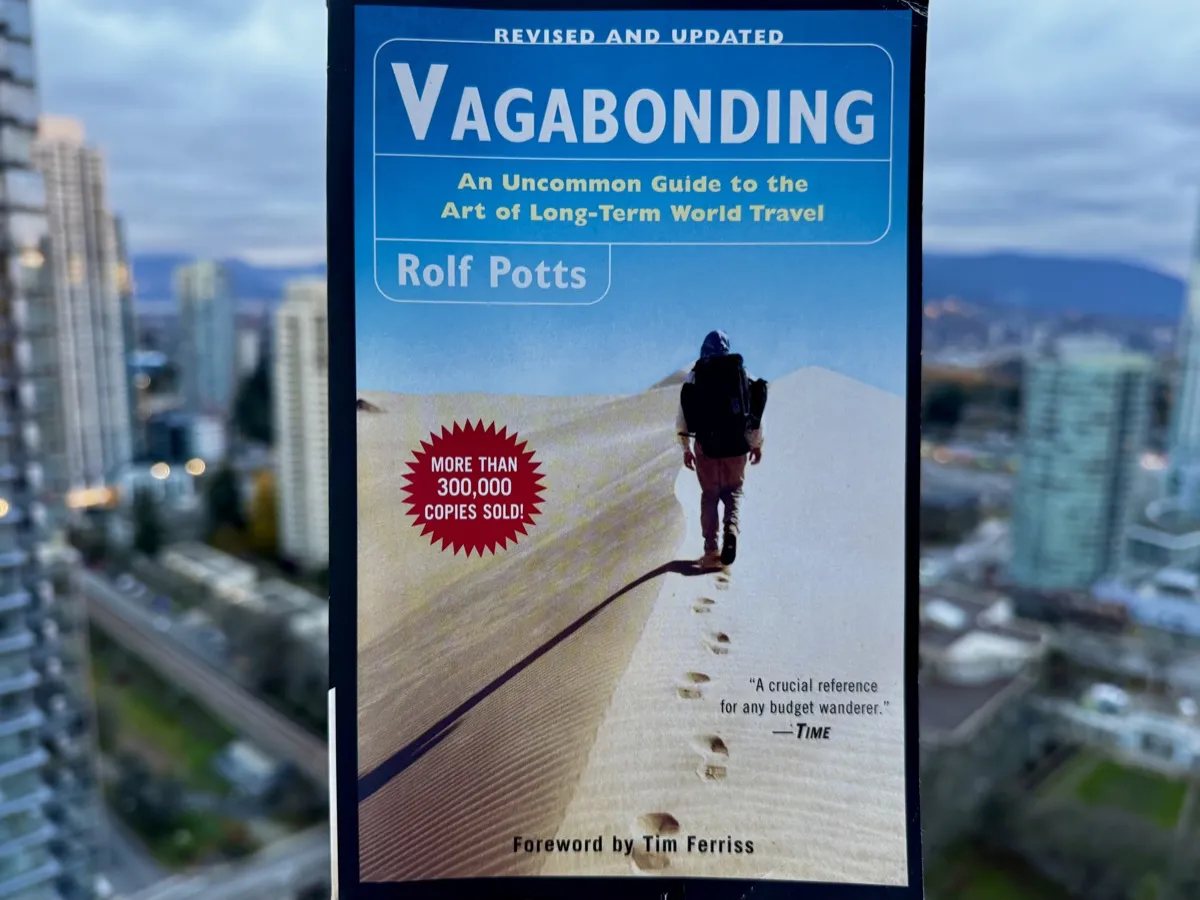
Book Vagabonding
Time is the real currency
Vagabonding is taking an extended time out from your normal life, from six weeks to two years, to travel the world on your own terms. But the book says that beyond travel, it is an outlook on life, and it is mostly about time and how we choose to use it.
We usually see long-term travel as a dream for students, dropouts or rich people, and we squeeze our travels into short vacations. But according to the author, long-term travel has nothing to do with age or income. It needs less money than we think, and more of a decision to use our time in a different way. Money is needed to survive, but time is what we need to live.
Make work serve you
The book doesn’t say to stop working. Work is how you pay your debts and earn your freedom, so your travels are not an escape from your real life but a discovery of it. The difference is that a vacation rewards work, while vagabonding justifies it.
One option the book mentions, and the one closest to me, is what the author calls “constructive quitting”: negotiating a sabbatical or a long leave of absence with your employer. As Pico Iyer puts it in the book, quitting is not giving up, but moving on in the direction of your dreams.
Keep it simple
To save money and time for travel, the book suggests simplifying your life at home first: stop buying new things (including travel gear), rein in your routine and reduce clutter. It also helps you realize how independent you are from your possessions.
On the road, the advice is the same: pack as little as possible, in a very small bag. Most people end up dumping three-quarters of what they packed within two weeks anyway.
I have been keeping my life simple and minimalist for a while now, as I shared in how we manage money as a couple, and I don’t like to buy new things. But the idea of having only a backpack during my travels scares me a bit.
Plan, but not too much
Preparing is important, especially the first time, but the goal is not to know exactly where you will go, but to be confident that you will get there. Your attitude matters more than your itinerary.
Use guidebooks as a reference, not as a holy book, don’t book every tour in advance, and don’t try to “do” a whole continent in one trip. The slow experience of one country is better than a rushed one of many. And the worst-case scenarios we imagine while planning rarely come true.
I am an overplanner. I plan our vacations well in advance, I like to book things as soon as possible, and I usually have a schedule for the trip. The idea of not having a schedule and just going with the flow is interesting and challenging, and it may lead to a lot of personal growth.
Slow down
The author repeats it in capital letters: SLOW… DOWN. At home, we are used to getting things done and favoring goals and efficiency. On the road, the point of long-term travel is having time to move deliberately, so the advice is to not keep a “things to do” list, watch and listen, and take things as they come.
If the line for a famous attraction is too long, you can just sit nearby and watch the city go by. You are in control of your own agenda.
Interact with the people around you
We don’t need to wait to be traveling around the world to get interested in the local people. You can open your mind now to get to know more people around you. Here in Vancouver, we have people from around the world, so we can get to know a bit about everyone and everywhere, even without taking a flight elsewhere.
The book says the most interesting experiences come from people whose lives are completely different from ours, not from other travelers like us. The point is not to judge other cultures, but to understand them, and a sense of humor helps more than political correctness. Even a simple question, like asking a local where to find a good restaurant, can start a conversation.
Get out of your comfort zone
Adventures are everywhere, you just need to be open to them. Some of ours were on our Iceland road trip and our orangutan trek in Sumatra.
According to the book, the secret of adventure is not to seek it out, but to travel in a way that lets it find you. Adventure is often a decision after the fact, and it can come from simple things you wouldn’t normally do, like taking up an invitation to dine with a stranger or exploring a random place. It reminded me of my learnings from The Comfort Crisis, about how much we grow from discomfort.
Worry less about the outcome
That’s one of the hardest ideas for me to digest. I’m a person who is kind of addicted to productivity and being productive. I have a hard time sitting idle without doing anything, and a long period without being productive would be a big challenge.
But at the same time, I feel that I need that. I wrote more about my relationship with work in my learnings from The Good Enough Job.
The book describes vagabonding as a pilgrimage without a specific destination: if you travel with specific goals, at best you get the pleasure of achieving them, but if you wander with open eyes, you get the feeling of possibility everywhere you go. And often the best experiences come from not finding what you hoped to discover.
Favorite quotes
These are my favorite quotes from the book.
- “Long-term travel isn’t about being a college student; it’s about being a student of daily life.”
- “A vacation, after all, merely rewards work. Vagabonding justifies it.”
- “Money, of course, is still needed to survive, but time is what you need to live.” (Ed Buryn, quoted in the book)
- “The secret of adventure, then, is not to carefully seek it out but to travel in such a way that it finds you.”
- “People travel to faraway places to watch, in fascination, the kind of people they ignore at home.” (Dagobert Runes, quoted in the book)
Final thoughts
Even though I have no plans for long-term travel, the book was a really good reminder to enjoy what I have around me, and it also made me even more interested in getting to know more about the world.
But even more, it made me think about knowing myself and reflecting on what I like, value and enjoy. Even if you are not planning a long-term trip, this book is a great read.
It was so good that after I returned the copy to the library, I ended up buying one to keep and read specific parts at random times.
These are my learnings from the book Vagabonding: An Uncommon Guide to the Art of Long-Term World Travel written by Rolf Potts. A special thanks to my public library for allowing access to the book for free.
Cheers.
Liked this post? Check out other posts part of the series Learnings from books where my goal is to share what I learned from the book that I read. It is a mixture of review and summary with a bit of my opinion and point of view